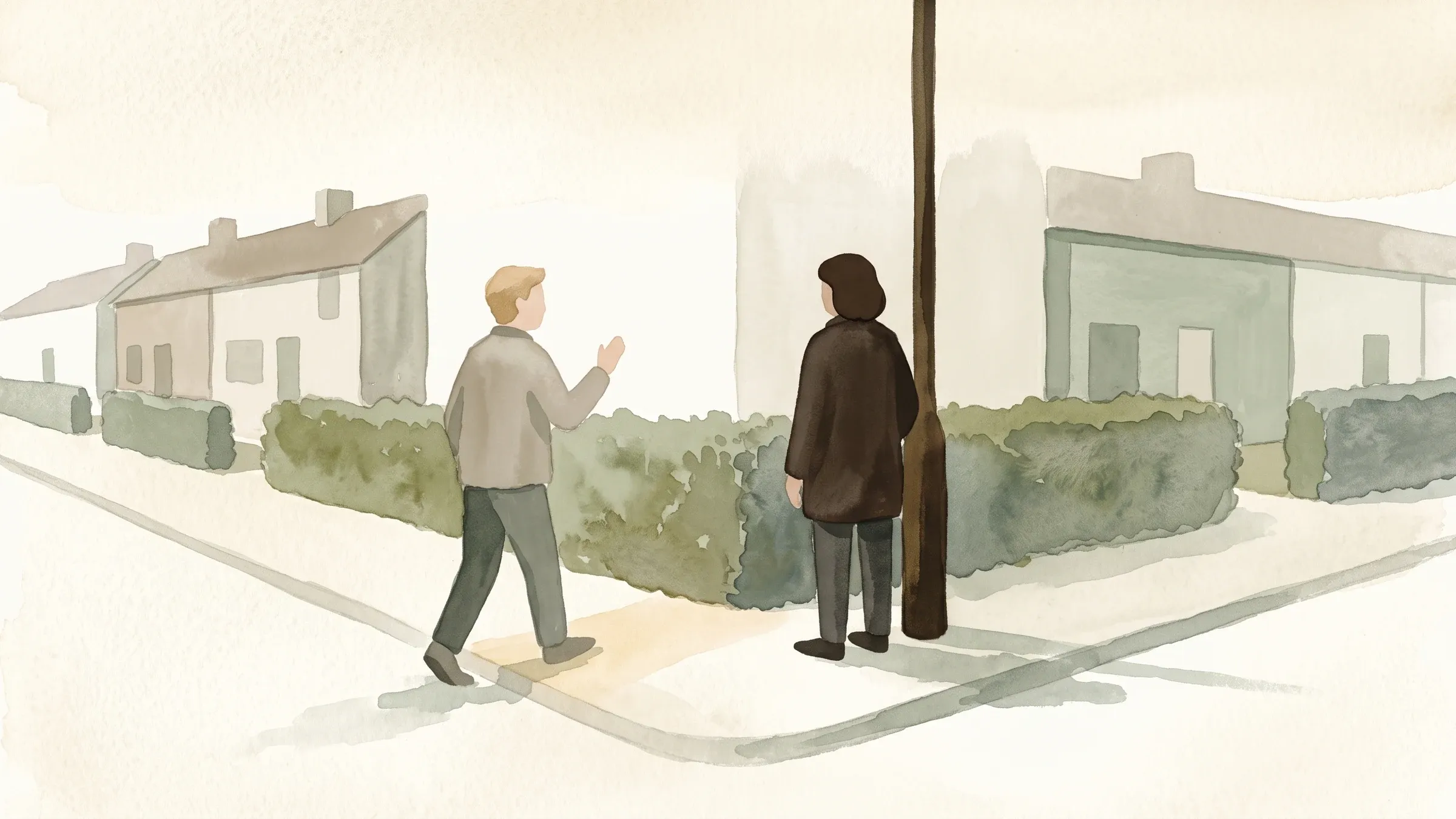
Every Sunday night, Dana promised herself Monday was the day. New week, a walk before work, fresh start. By Wednesday the shoes were still parked by the door, and the promise had quietly rolled to next Monday.
You already know the fix, because you’ve felt it. The one week you actually walked every day was the week a friend texted “you coming?” Walking alone is easy to skip. Walking with someone is hard to bail on.
That’s the whole idea behind a walking buddy app. But the phrase hides two completely different tools, and picking the wrong one is why so many people download something, walk twice, and quit. This guide sorts them out: what a walking buddy app actually is, what the research says about why a buddy works, how to find a new one near you, and how to walk with the buddy you already have, even if they live three states away.
If your “buddy” is a friend you already have, you can skip the matchmaking entirely. Get Steps Club free on the App Store or Google Play and start a club with your people in about 30 seconds.
What is a walking buddy app?
A walking buddy app helps you walk with another person instead of alone. There are two kinds: matchmaker apps that pair you with a nearby stranger who shares your pace and schedule, and companion apps that help you walk with someone you already know.
Most people don’t realize they’re different products. They search “walking buddy app,” land on a matchmaker, and feel let down when the point was to walk with their sister, not a new acquaintance from across town.
Here’s the split in plain terms:
- Matchmaker apps answer “I don’t have anyone to walk with, find me someone.” Examples include Walk Buddy, WalkingPal, WaBu, and Walk With Me, plus Meetup for local walking groups. They filter by pace, area, and time, then you arrange a meetup.
- Companion apps answer “I have people, help us actually do this together.” Examples lead with private groups and shared step visibility instead of stranger matching. Steps Club sits here, built around friends, couples, and families you already have.
Knowing which job you’re hiring for saves you a month of false starts. The rest of this guide covers both.
Does a walking buddy actually help you walk more?
Yes, and it isn’t a small effect. People stick with walking far more reliably when someone else is involved. A 42-study review of walking groups found roughly 75% adherence with virtually no adverse effects, and couples who start a program together are dramatically less likely to quit.
Start with the buddy effect itself. Researchers at Kansas State University documented what’s called the Köhler effect: people who exercised alongside a partner they saw as a little more capable increased their persistence and effort by as much as 200% compared to going solo, holding planks far longer before giving up (Kansas State University, 2012). You push harder when someone’s there, without even meaning to.
Then there’s staying power, which is where most solo plans die. The walking-group review by Hanson and Jones, published in the British Journal of Sports Medicine, pooled 42 studies and 1,843 participants and found mean adherence around 75%, alongside real gains: systolic blood pressure down 3.72 mmHg and resting heart rate down 2.88 bpm (Hanson & Jones, 2015). A separate study of adults found that those who got social support specifically for walking were measurably more likely to increase how often they walked each week.
The starkest number comes from couples. In a classic 12-month study, adults who joined a fitness program with a spouse had about a 6.3% dropout rate, versus roughly 43% for those whose spouse stayed home. Same program, wildly different finish line, decided almost entirely by whether someone walked it with them.
None of this is really about steps. The U.S. Surgeon General’s 2023 advisory put hard numbers on loneliness, noting that weak social connection raises premature-death risk on par with smoking up to 15 cigarettes a day. A walking buddy isn’t just a fitness tactic. It’s a standing reason to see someone.
How do you find a walking buddy near you?
To find a new local walking buddy, use a matchmaker app like Walk Buddy, WalkingPal, or WaBu, or join a walking group on Meetup. They match you by pace, schedule, and neighborhood, then you agree on a time and place and show up.
Each works a little differently. WalkingPal describes itself as “Uber for pedestrians,” surfacing on-demand walking partners. Walk Buddy and WaBu focus narrowly on pairing you with like-minded local walkers and arranging a walk request. Walk With Me filters by pace (casual to brisk), terrain, and duration. Meetup isn’t walking-specific, but most areas have at least one walking or hiking group you can join free.
The honest catch: matchmaker apps live or die on local density. In a big city you’ll find matches fast. In a small town, you may open the app to an empty map. Match quality varies too, the way it does on any platform that pairs strangers.
If you go this route, treat the first walk like any first meeting with someone new:
- Meet in a public, populated place for the first walk, never a secluded trail.
- Walk in daylight until you know the person.
- Tell a friend where you’ll be and when you expect to be back.
- Share live location with someone you trust during the walk.
- Trust your gut. No second walk is owed to anyone who felt off.
Done with reasonable care, meeting a new walking partner can turn a lonely habit into the best part of someone’s day. For a wider view of group-walking tools beyond one-to-one matching, our best walking apps for groups guide ranks the main options.
What if your walking buddy is someone you already know?
If your buddy is a friend, partner, or family member you already have, you don’t need a stranger-matching app. You need one that lets you walk together even when you’re apart. That’s the gap Steps Club was built to fill.
This is the case nobody designs for, and it’s the most common one. Your walking buddy isn’t a stranger you have to go find. It’s your college roommate who moved to Denver, your mom across town, your partner who’s traveling for work this week. The barrier was never finding them. It’s that life put distance between you and the habit fell apart.
Steps Club works by making your people visible. You create a private club for your crew, there’s no member cap, and you see each other’s steps update live through the day, right on a homescreen widget. When you head out, you can start a Live Walking Session, and your friends see you’re out there. When they’re walking too, you see them. Miles apart, walking at the same time, both knowing it.
Take Priya and her college roommate Sam. After graduation, Sam moved 800 miles away and their daily walks turned into occasional texts. They made a two-person club. Now Priya’s 7am walk in Chicago overlaps with Sam’s lunch break in Austin. Neither tracks who walked more, there are no leaderboards, just two widgets quietly showing each other still showing up. They’ve walked more consistently apart than they ever did living together.
A few things make the already-a-friend case work:
- Private by default. No strangers, no public feed. Your steps stay between you and your people.
- Personal goals, not shared targets. Your buddy’s 6,000-step goal and your 12,000-step goal both count. No comparison, no shame.
- Gentle, not gamified. The activity feed is for cheering each other on with a tap, not ranking anyone.
- Works with what you wear. Steps sync automatically through Apple Health, so Apple Watch, Fitbit, Garmin, WHOOP, and Oura all feed in.
Want to walk with the people you already have? Create your first club free, invite your buddy with a link, and you’re walking together by tomorrow morning. For the bigger picture on why this works, see our complete guide to walking with friends.
What are the best walking buddy apps in 2026?
The best walking buddy app depends on the job. To meet a new walker, pick a matchmaker app or Meetup. To walk with friends or family you already have, pick a connection-first app like Steps Club. To stay accountable across iPhone and Android, pick something cross-platform.
Here’s how the main options sort by what you’re actually trying to do:
| App | Best for | How it works | Platform | Cost |
|---|---|---|---|---|
| Steps Club | Walking with friends, couples, and family you already have (incl. long-distance) | Private clubs, live step visibility, Live Walking Sessions | iOS / Android | Free (2 clubs, 5 friends); Pro $4.99/mo |
| Walk Buddy / WaBu | Finding a new local walking partner | Matches you with nearby walkers, you arrange a walk | iOS / Android | Free to start |
| WalkingPal | On-demand local walking partners | ”Uber for pedestrians” style matching | iOS / Android | Free to start |
| Meetup | Joining an existing local walking group | Local interest groups you join and attend | iOS / Android / web | Free to join |
| Pacer | Cross-platform buddy across iPhone + Android | Step tracking with friends and group challenges | iOS / Android | Freemium |
| StepUp | Workplace or large competitive groups | Leaderboard-driven step challenges | iOS / Android | Freemium |
A quick way to choose:
- You have nobody to walk with yet → a matchmaker app (Walk Buddy, WalkingPal, WaBu) or Meetup.
- Your buddy already exists → Steps Club, whether you’re both on iPhone, both on Android, or split across the two.
- You want a competitive office challenge → StepUp.
Notice these don’t really compete. They answer different questions. The mistake is using a leaderboard app to stay close to one person, or a stranger-matcher when the person you want is already in your contacts. If you mostly want one reliable partner, our guide to finding a walking accountability partner goes deep on the one-to-one version.
How do you keep a walking buddy habit going?
Keep a walking buddy habit alive by making it visible and low-pressure: a loose set time, an easy way to see each other’s progress, and a no-shame rule for missed days. Celebration outlasts streak-policing every time.
The research on adherence points the same direction. Walking groups hit ~75% adherence partly because showing up is social, not a solo act of willpower. You can recreate that with one person.
A few things that hold a buddy habit together:
- Anchor it to a time you both already have. “After the morning coffee” sticks better than a calendar invite.
- Make progress glanceable. A widget or shared view means you notice your buddy walking without a single nagging text.
- Cheer, don’t audit. A quick reaction when they hit their goal does more than asking why they missed yesterday.
- Write a missed-day rule in advance. One skipped day is data, not failure. The pact survives if you decide that now.
When Marcus and his brother started, they made a rule before the first walk: if either missed two days, no guilt, just a “you good?” check-in. Eight months later they’ve never used the guilt-trip version, because they never built one. That’s the quiet trick. The habit lasts because nobody’s keeping score.
If your buddy lives in another city and you want the togetherness without the logistics, a walk together app built for distance does the heavy lifting, syncing your walks so you feel side by side even when you aren’t.
The bottom line on walking buddy apps
A walking buddy app is two tools wearing one name, and choosing well comes down to a single question: do you need to find a buddy, or walk with the one you already have?
- If you need a new partner, matchmaker apps (Walk Buddy, WalkingPal, WaBu) and Meetup are built for exactly that, just walk the first one safely.
- If your buddy already exists, a connection-first app like Steps Club skips the matchmaking and gets you walking together, even from different cities.
- The research is settled. A buddy roughly doubles your odds of sticking with it, from the Köhler effect to a 42-study review to the couples who simply don’t quit when someone joins them.
- Connection is the point. The steps are just the excuse to keep showing up for each other.
The best walking buddy is almost always someone you already love. The right app just makes it easy to keep walking with them. Download Steps Club free, start a club, and invite the person you’ve been meaning to walk with. Tomorrow morning, you’re out there together.